
School Lunch Menus
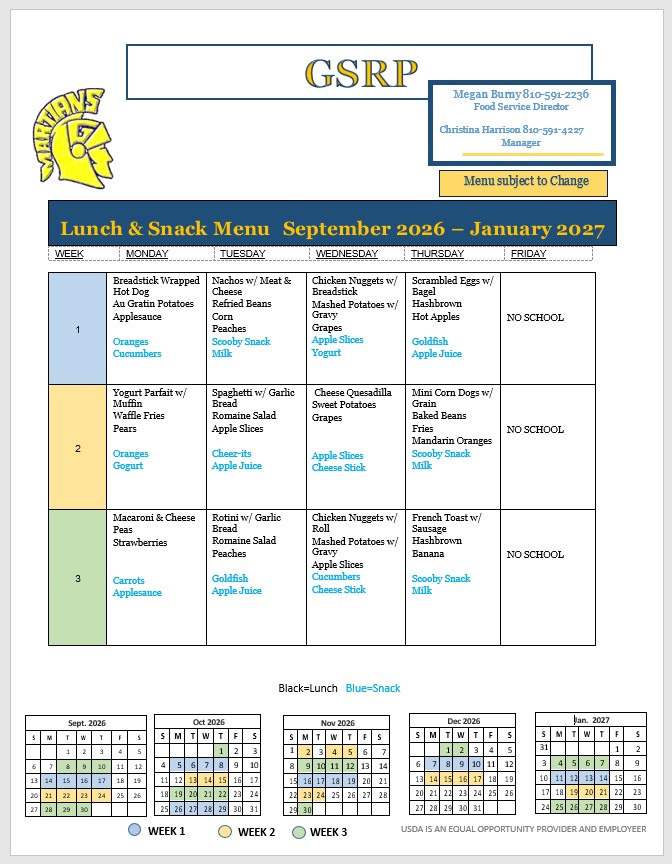
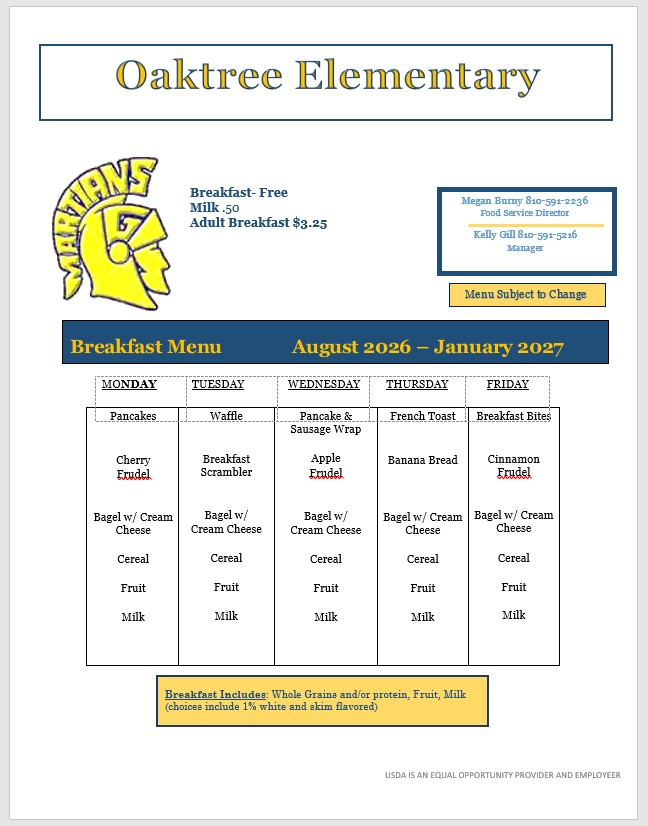
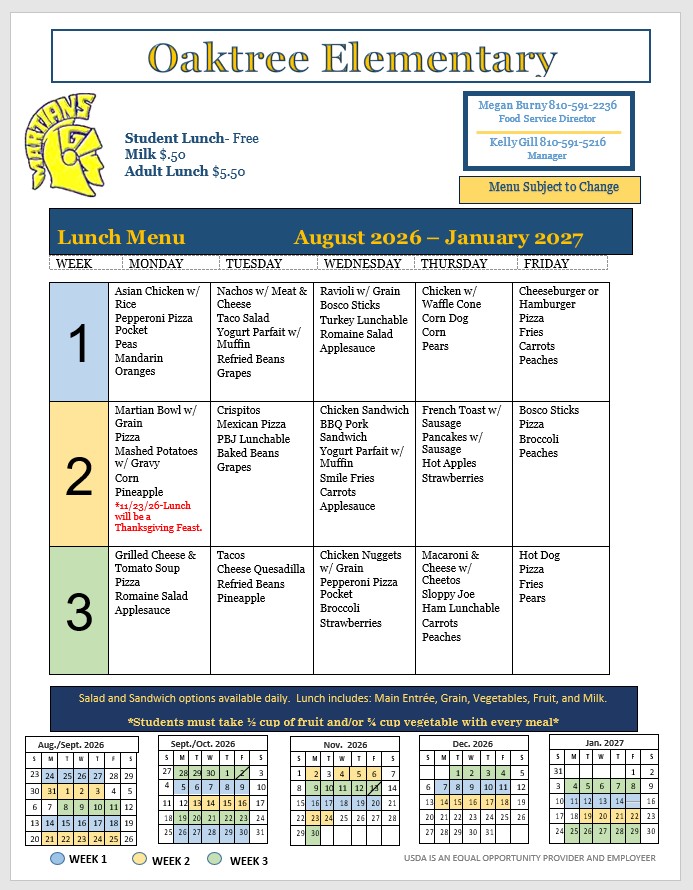
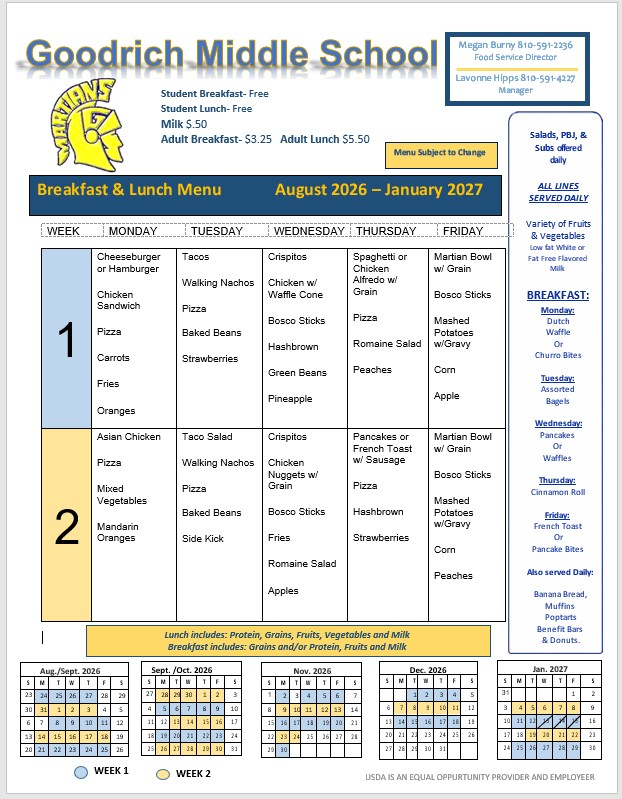
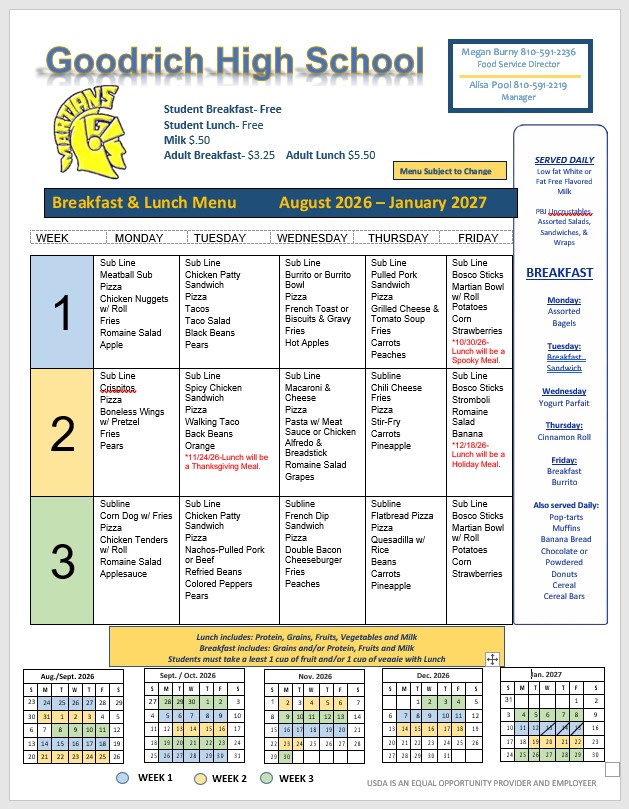
UPDATE ON MICHIGAN SCHOOL MEALS FOR 2026-2027
We are also pleased to announce that free breakfast and lunch will continue to be available to all students throughout the 2026–2027 school year. Every student is eligible to receive one free breakfast and one free lunch each school day, regardless of household income. Please note that à la carte items and second meals are not included in the free meal program and will continue to be available for purchase.
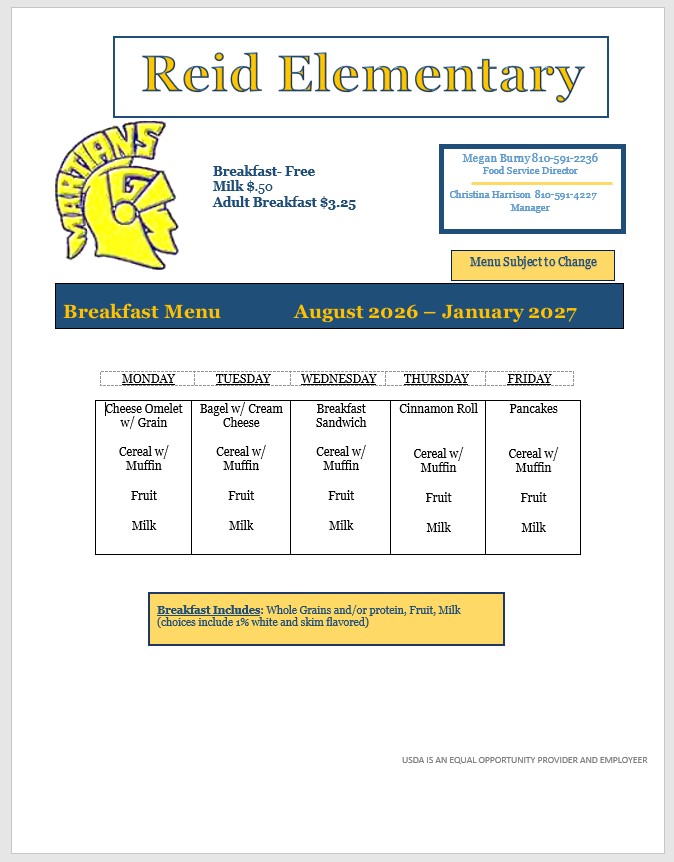
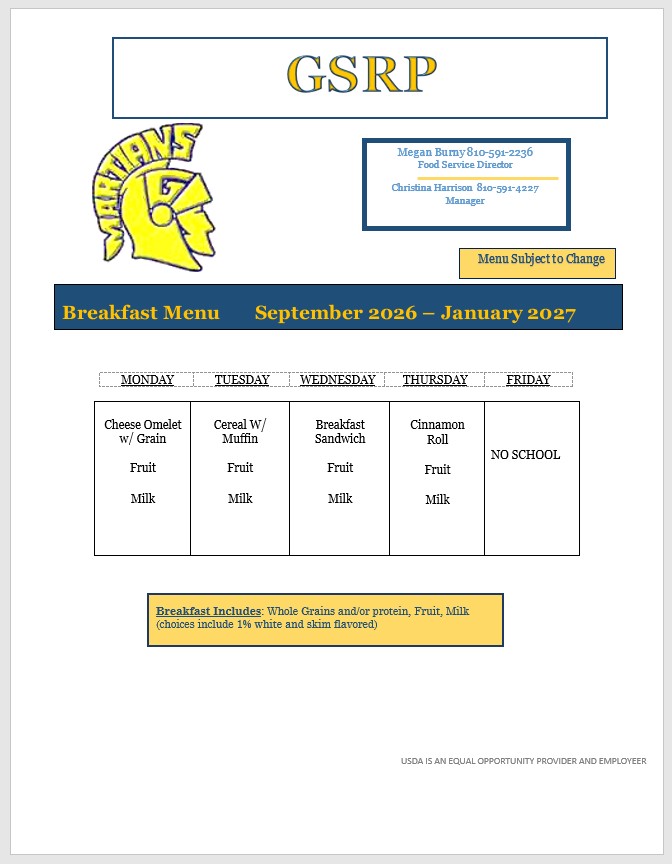
BREAKFAST
DID YOU KNOW? BREAKFAST IS AVAILABLE AT SCHOOL!
WHY CHOOSE SCHOOL BREAKFAST?
School breakfast will give your child a healthy start to the day. Students who eat breakfast have better attention and memory (1), and studies show that eating breakfast at school results in higher test scores (2). Hungry children are more likely to have discipline problems. However, teens who eat regularly are less likely to be suspended from school (1). Kids who participate in the School Breakfast Program are late or absent from school less often (2).
Breakfast selections include whole grain rich items, fresh or canned fruit, 100% fruit juice and low fat or fat free dairy products. A healthy breakfast can help students learn better!
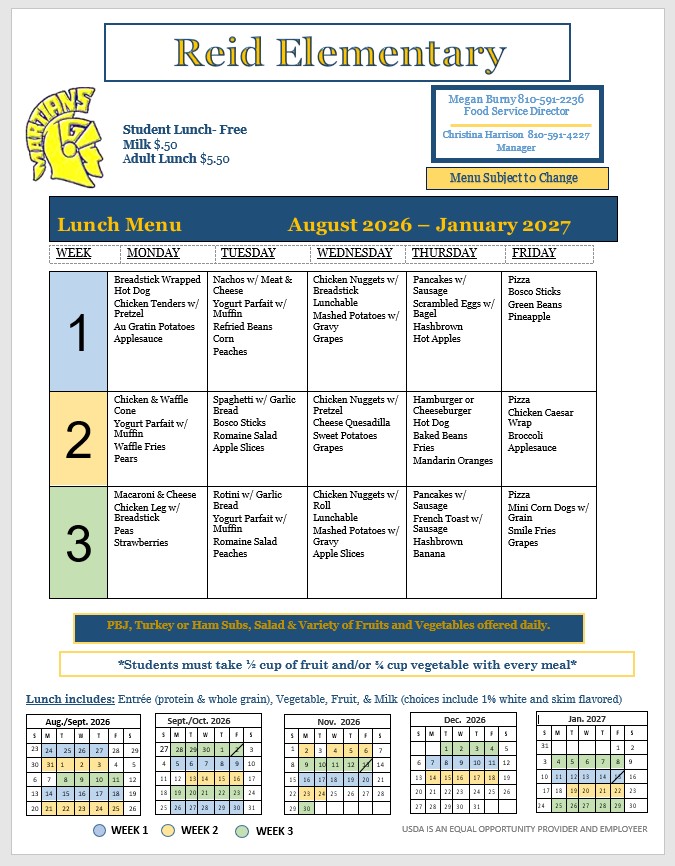
LUNCH
Goodrich Area Schools is serving school meals that meet tough new federal nutrition standards, ensuring that meals are healthy, well balanced and provide students all the nutrition they need to succeed in school.
School meals offer milk, fruit and vegetables, proteins and grains, and they must meet strict limits for saturated fat and portion size. Also, lunches will meet additional standards requiring:
- Age-appropriate calorie limits
- Larger servings of fruit and vegetables (students must take at least one serving with each meal)
- A wider variety of vegetables including dark green, red/orange, and legumes
- Fat free flavored milk and fat free or 1% white milk
- All whole grains
- Less sodium
_1786481500.png)
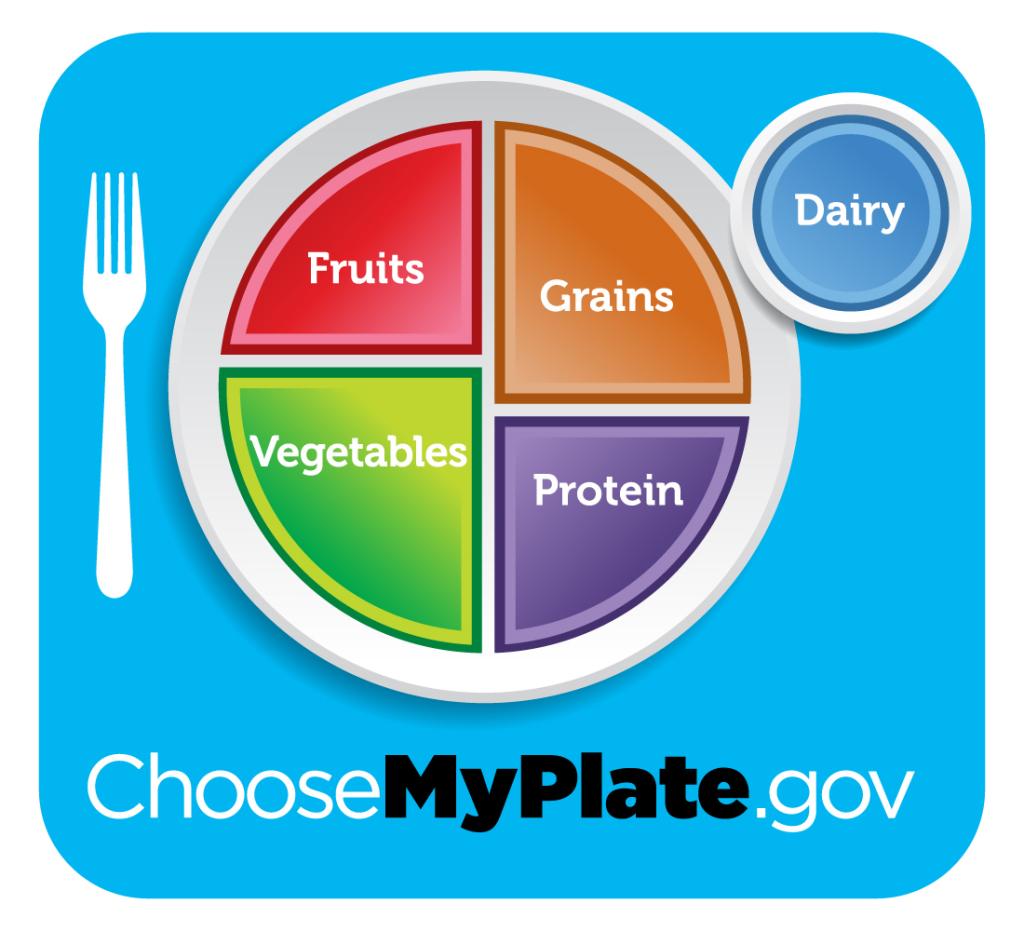
Build a healthy plate
Before you eat, think about what goes on your plate or in your cup or bowl. Foods like vegetables, fruits, whole grains, low-fat dairy products, and lean protein foods contain the nutrients you need without too many calories. Try some of these options.
- Make half your plate fruits and vegetables.
- Switch to skim or 1% milk.
- Make at least half your grains whole.
- Vary your protein food choices.
- Keep your food safe to eat - learn more at Food Safety.
Cut back on foods high in solid fats, added sugars, and salt
Many people eat foods with too much solid fats, added sugars, and salt (sodium). Added sugars and fats load foods with extra calories you don't need. Too much sodium may increase your blood pressure.
- Choose foods and drinks with little or no added sugars.
- Look out for salt (sodium) in foods you buy - it all adds up.
- Eat fewer foods that are high in solid fats.
Eat the right amount of calories for you
Everyone has a personal calorie limit. Staying within yours can help you get to or maintain a healthy weight. People who are successful at managing their weight have found ways to keep track of how much they eat in a day, even if they don't count every calorie.
- Enjoy your food, but eat less.
- Cook more often at home, where you are in control of what's in your food.
- When eating out, choose lower calorie menu options.
- Write down what you eat to keep track of how much you eat.
- If you drink alcoholic beverages, do so sensibly - limit to 1 drink a day for women or to 2 drinks a day for men.
Be physically active your way
Pick activities that you like and start by doing what you can, at least 10 minutes at a time. Every bit adds up, and the health benefits increase as you spend more time being active.
Note to parents: What you eat and drink and your level of physical activity are important for your own health, and also for your children's health.
You are your children's most important role model. Your children pay attention to what you do more than what you say.
You can do a lot to help your children develop healthy habits for life by providing and eating healthy meals and snacks. For example, don't just tell your children to eat their vegetables - show them that you eat and enjoy vegetables every day
USDA Nondiscrimination Statement
In accordance with federal civil rights law and U.S. Department of Agriculture (USDA) civil rights regulations and policies, this institution is prohibited from discriminating on the basis of race, color, national origin, sex (including gender identity and sexual orientation), disability, age, or reprisal or retaliation for prior civil rights activity.
Program information may be made available in languages other than English. Persons with disabilities who require alternative means of communication to obtain program information (e.g., Braille, large print, audiotape, American Sign Language), should contact the responsible state or local agency that administers the program or USDA’s TARGET Center at (202) 720-2600 (voice and TTY) or contact USDA through the Federal Relay Service at (800) 877-8339.
To file a program discrimination complaint, a Complainant should complete a Form AD-3027, USDA Program Discrimination Complaint Form which can be obtained online at: USDA Program Discrimination Complaint Form, from any USDA office, by calling (866) 632-9992, or by writing a letter addressed to USDA. The letter must contain the complainant’s name, address, telephone number, and a written description of the alleged discriminatory action in sufficient detail to inform the Assistant Secretary for Civil Rights (ASCR) about the nature and date of an alleged civil rights violation. The completed AD-3027 form or letter must be submitted to USDA by:
- mail: U.S. Department of Agriculture Office of the Assistant Secretary for Civil Rights 1400 Independence Avenue, SW Washington, D.C. 20250-9410; or
- fax: (833) 256-1665 or (202) 690-7442; or
- email: Program.Intake@usda.gov
This institution is an equal opportunity provider.
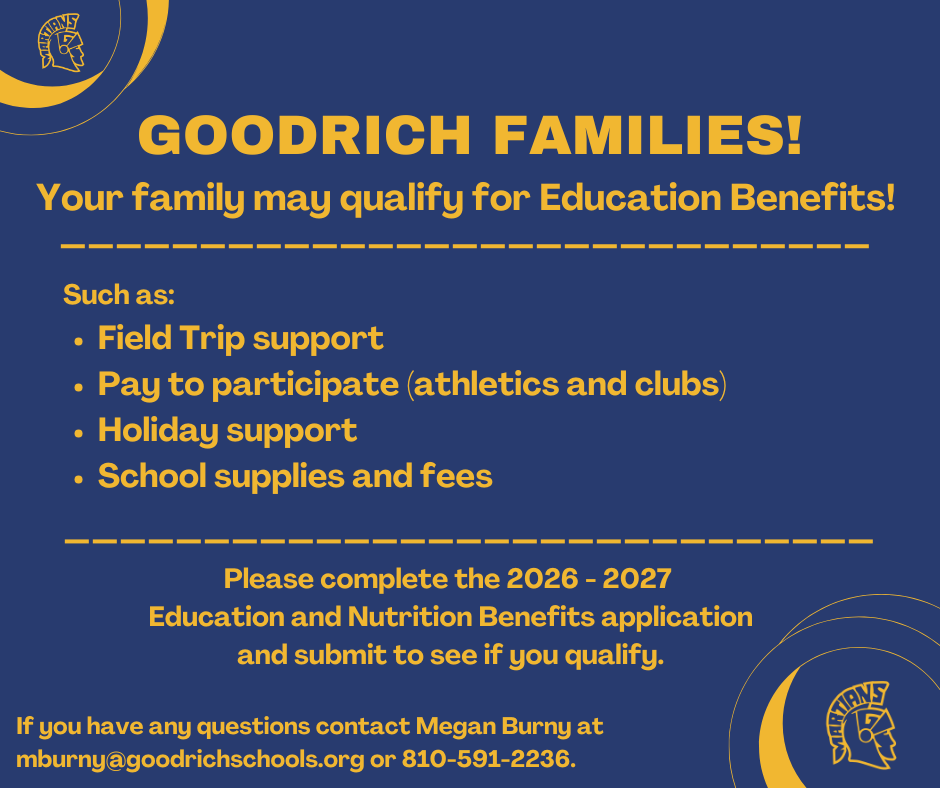
Educational and Nutrition Benefits – For more information select the links below.
FAQ: Does My Family Qualify for Free or Reduced Meals?
How to complete the Educational and Nutritional Benefits Application
Family Sharing of Information Form
Educational and Nutritional Benefits 2026-2027
We're Always Looking For Great People Like YOU!!
FOOD SERVICE POSITIONS
Click here to apply or scan code below
